CIA History
Sordid timeline of CIA overthrowing governments
GlobalHarmony.Blog
4/9/202615 min read
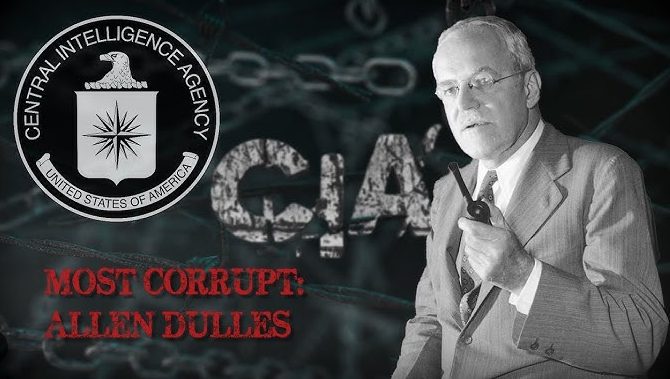
The Secret CIA Operations to Overthrow Left-Leaning Democracies around the World and replace them with Cruel Dictatorships who would Bow to U.S. Demands --
This Evil Practice of our CIA began in Iran and Swiftly Led to Other Countries in South America and Asia.
We are Not the Good Guys We Claim to Be, Folks!
"Receipts: Just Some of What We Did Abroad — And What We Took Away
Iran, 1953 – The Oil That Should Have Fed the Iranian People.
• What They Were Building: Mossadegh nationalized oil so the profits could be used to build schools, hospitals, and clean water systems for Iranians. Women were joining universities and government service.
• What We Did: The CIA staged a coup, restored the Shah, and returned oil to British and U.S. control.
• What They Lost: Freedom of speech and democracy. The Shah’s secret police tortured thousands. In 1979, the backlash brought a theocracy that stripped women of their rights overnight. They went from a culture similar to ours to stringent religious rules in which women are forced to cover everything but their faces.
Guatemala, 1954 – Land for the Landless
• What They Were Building: Árbenz’s land reform gave poor farmers access to land — a chance to grow food, end hunger, and break the plantation system.
• What We Did: We ran a psychological war (like they’re doing in America—look around), toppled Árbenz, and installed a military junta.
• What They Lost: 36 years of civil war and 200,000 dead or disappeared. Guatemala remains impoverished today.
Colombia, 1950s–1960s — The Birth of Latin America’s Death Squads
What they were building:
Colombia’s Liberal Party and peasant movements (like the Colombian Communist Party) pushed for land reform and workers’ rights in the 1950s–60s. The U.S. saw this as a “communist threat” and feared a “second Cuba.”
What we did:
The CIA trained Colombian military and police in counterinsurgency, including targeted assassinations of leftist leaders and union organizers. The U.S. funded and armed paramilitary groups (precursors to today’s death squads) to crush peasant uprisings in regions like Tolima and Valle del Cauca. These groups later evolved into the AUC, responsible for thousands of massacres. The U.S. backed the 1957 coup against General Gustavo Rojas Pinilla, who had tried to balance U.S. and Soviet influence. The new pro-U.S. government outlawed the Communist Party and unleashed violence against rural communities.
What they lost:
Decades of civil war (1964–present), with 260,000+ dead and millions displaced. Land stolen: Peasant cooperatives were broken up, and land was handed to U.S. agribusiness (like United Fruit).
Brazil, 1964 — The Coup That Stole Democracy for Land Reform
What they were building:
President João Goulart’s government (1961–1964) was pushing for radical reforms to address Brazil’s extreme inequality and foreign corporate dominance. His administration aimed to:
Redistribute land from wealthy elites to peasant farmers, breaking the power of the latifundio system.
Nationalize foreign-owned industries, including U.S. oil and mining companies, to fund social programs.
Strengthen workers’ rights, including union protections and a living wage.
Pursue an independent foreign policy, including ties to socialist countries like Cuba, which alarmed Washington.
Goulart’s reforms threatened U.S. corporate giants like Standard Oil, ITT, and United Fruit, and his popularity among the poor and working class made him a model for leftist movements across Latin America. The U.S. saw him as a potential “second Castro” and moved to stop him.
What we did:
The CIA, under Operation Brother Sam, orchestrated Goulart’s overthrow in a military coup on March 31, 1964. The U.S. funneled millions of dollars to anti-Goulart business elites, military officers, and media outlets, while positioning warships off Brazil’s coast to intimidate his supporters. The CIA also spread propaganda portraying Goulart as a “communist puppet” and staged fake pro-coup protests to manufacture public support for his removal.
When the military seized power, the U.S. immediately recognized the new regime, and President Lyndon Johnson celebrated the coup as a “victory for the free world.” The CIA provided the junta with lists of leftists, union leaders, and activists to arrest, torture, or disappear, ensuring the new government could crush dissent.
What they lost:
21 years of military dictatorship (1964–1985), during which political parties were banned, Congress was dissolved, and the press was censored.
Thousands imprisoned, tortured, or “disappeared” by the regime’s secret police, including artists, intellectuals, and labor leaders.
Economic exploitation: The junta reversed land reform, privatized state industries, and opened Brazil’s economy to U.S. corporations, widening inequality and stagnating wages.
Labor rights destroyed: Unions were outlawed or co-opted by the state, and strikes were met with military violence.
A legacy of state terror: The 1964 coup set the stage for Operation Condor, a U.S.-backed campaign of cross-border assassinations of leftists across South America.
Indonesia, 1965 – The Bloodbath We Helped Organize
• What They Were Building: A democratic system with one of the largest nonviolent communist parties in the world, improving literacy and women’s rights.
• What We Did: Supplied Suharto with kill lists and communications support.
• What They Lost: 500,000+ murdered, decades of dictatorship.
Greece, 1967 — The Military Junta
What happened: A U.S.-backed military junta overthrew Greece’s democratically elected government in April 1967, fearing a leftist takeover.
Why the U.S. intervened: The CIA and U.S. military had close ties to the junta leaders, who were seen as bulwarks against communism in NATO’s southern flank. The junta suspended civil liberties, banned political parties, and imprisoned thousands of dissidents.
Result: The junta ruled Greece for seven years, during which torture and political repression were widespread. The U.S. provided political and military support throughout the dictatorship, only withdrawing backing after the junta’s collapse in 1974.
Bolivia, 1967 — The CIA’s Hunt for Che Guevara
What they were building:
Che Guevara’s guerrilla movement in Bolivia (1966–1967) aimed to inspire a continent-wide revolution against U.S. imperialism and local oligarchies.
What we did:
The CIA trained and equipped Bolivia’s military, including the Rangers Battalion that captured and executed Che in 1967. The U.S. provided real-time intelligence to track Che’s movements, including radio intercepts and informants. After Che’s death, the CIA helped Bolivia’s military crush peasant uprisings and install a series of pro-U.S. dictatorships that lasted until the 1980s.
What they lost:
Che’s vision of Latin American unity was destroyed. Decades of military rule: Bolivia’s leftist movements were driven underground, and the country became a U.S. client state for drug war operations.
Vietnam, 1955–1975 — The War to Stop a Peasant Revolution
What they were building:
After defeating French colonialism in 1954, Ho Chi Minh’s communist government in North Vietnam sought to:
Redistribute land from French and U.S.-backed elites to peasant farmers, ending feudal exploitation.
Build a self-sufficient economy, prioritizing education, healthcare, and infrastructure.
Unify Vietnam under a socialist system, free from foreign domination.
The U.S. feared Vietnam would become a “domino,” inspiring anti-colonial revolutions across Asia.
What we did:
Installed a brutal puppet regime in South Vietnam (Ngo Dinh Diem, later replaced by a series of U.S.-backed dictators).
Launched a 20-year war (1955–1975), including:
Chemical warfare: Dropped 20 million gallons of Agent Orange, poisoning land and causing birth defects for generations.
Massacres: U.S. troops committed atrocities like the My Lai massacre (500+ civilians slaughtered).
Bombing campaigns: The U.S. dropped more bombs on Vietnam than in all of WWII, killing 3–4 million Vietnamese (mostly civilians).
Sabotaged peace talks and prolonged the war to bleed Vietnam dry, even after it was clear the U.S. could not win.
Supported death squads like the Phoenix Program, which assassinated tens of thousands of suspected communists.
What they lost:
3–4 million Vietnamese dead, with millions more injured or displaced.
Land and infrastructure destroyed: The U.S. left Vietnam with unextracted landmines, poisoned soil, and a collapsed economy.
A generation traumatized: The war’s legacy includes Agent Orange victims, orphaned children, and a country still recovering.
A lesson in U.S. hypocrisy: The war was sold as “stopping communism,” but the real goal was to prevent Vietnam from becoming a successful, independent socialist state—one that could inspire others to resist U.S. dominance.
Brazil, 1960s–1970s — The CIA’s Torture Labs
What they were building:
After the 1964 coup, Brazil’s leftist guerrillas (like the MR-8 and ALN) and labor movements resisted the U.S.-backed dictatorship. These groups fought for the restoration of democracy, workers’ rights, and an end to U.S. corporate control over Brazil’s resources. Their resistance inspired fear in the junta and its American backers, who saw them as a threat to the “stability” of the regime.
What we did:
The CIA trained Brazil’s military and police in advanced torture techniques at the School of the Americas and through Project X, a secret program that tested psychological torture methods—including sensory deprivation, electric shocks, and waterboarding—on Brazilian prisoners. The U.S. also provided the dictatorship with lists of leftists, union leaders, students, and priests to target, ensuring the regime could systematically eliminate opposition.
Brazil became a testing ground for torture techniques that were later exported to other U.S.-backed dictatorships in Chile, Argentina, and Uruguay as part of Operation Condor. The CIA’s goal was not just to crush dissent in Brazil but to perfect a model of repression that could be replicated across the continent.
What they lost:
Hundreds disappeared into secret prisons, never to be seen again.
Thousands tortured in facilities like the DOI-CODI (Department of Information Operations), where victims were subjected to electric shocks, beatings, and psychological torment.
Labor rights destroyed: Unions were banned, wages collapsed, and workers lost all protections.
A generation of activists wiped out: The torture and disappearances left Brazil’s leftist movements in ruins for decades.
A blueprint for repression: The techniques perfected in Brazil were later used to crush dissent in Chile, Argentina, and beyond, making Brazil ground zero for the CIA’s global torture network.
Sri Lanka, 1970s–1980s — The Leftist Movement We Helped Crush
What they were building:
The Janatha Vimukthi Peramuna (JVP), a Marxist-Leninist party, emerged in the late 1960s as a radical alternative to Sri Lanka’s pro-Western elite. The JVP advocated for workers’ rights, land reform, and an end to foreign economic domination. Their 1971 uprising—though brutally suppressed—was a direct challenge to the U.S.-aligned government and the capitalist system. The JVP’s ideology resonated with rural youth and the working class, who were tired of poverty and foreign exploitation.
What we did:
CIA infiltration and smear campaigns: The CIA was accused of using the JVP as a pawn to destabilize Sri Lanka’s left-leaning United Front government (1970–1977), which had ties to the Soviet Union. Leftist parties in Sri Lanka, like the Communist Party and Lanka Sama Samaja Party, publicly claimed the JVP was a CIA-backed “snare” to discredit the broader leftist movement. The CIA allegedly provided intelligence and support to Sri Lankan security forces to crush the JVP, including during the 1971 insurrection that left 10,000–20,000 dead
Training and intelligence support: In the 1980s, the U.S. helped establish a Counter Subversive Division (CSD) in Sri Lanka’s security apparatus, with Israeli intelligence advisers (operating under the aegis of the U.S. Embassy) playing a key role. This division was used to hunt down, torture, and execute JVP members and sympathizers during the 1987–1989 insurrection, which saw tens of thousands more killed or disappeared
Backing right-wing governments: The U.S. supported the United National Party (UNP), which used death squads and paramilitary groups to suppress leftist and Tamil movements. The U.S. provided military aid and political cover, even as these forces committed atrocities—including extrajudicial killings and mass disappearances .
What they lost:
A generation of activists: The JVP uprisings were met with state terror, including public executions, torture, and mass graves. The Sri Lankan government, with U.S. backing, wiped out much of the leftist leadership, leaving the country’s progressive movements in ruins for decades.
Decades of civil war: The U.S.-backed militarization of Sri Lanka’s politics contributed to the 26-year civil war (1983–2009), which killed over 100,000 people. The same security forces that crushed the JVP also targeted Tamil separatists, with the U.S. turning a blind eye to war crimes.
Economic exploitation: Sri Lanka’s resources—tea, rubber, and textiles—remained under the control of Western corporations, while the U.S. and IMF imposed structural adjustment policies that deepened poverty and inequality.
The pattern:
Just like in Iran, Guatemala, and Chile, the U.S. sabotaged a homegrown leftist movement in Sri Lanka to protect corporate interests and geopolitical control. The JVP was branded as “terrorists” or “CIA pawns” (depending on who you asked), but the real goal was clear: prevent Sri Lanka from becoming another “successful example” of anti-capitalist resistance. CIA-backed coups and repression of leftist movements is far more common than we’ve been ALLOWED to know. Sri Lanka is a lesser-known but brutal example of how the U.S. used covert operations, military aid, and propaganda to crush democracy and install compliant regimes—all while ordinary people paid the price.
Chile, 1973 – The “Successful Example” We Couldn’t Allow
• What They Were Building: Allende expanded free healthcare, education, and pensions, lifting millions out of poverty.
• What We Did: Nixon and Kissinger funded strikes and sabotage to “make the economy scream,” then supported Pinochet’s coup.
• What They Lost: Thousands executed, tens of thousands tortured, unions destroyed, pensions privatized — inequality still defines Chile. Read about the Dirty War—they drugged and shackled dissidents and pushed them out of cargo planes into the ocean. We didn’t know for many decades but finally someone spoke the truth and the rumors were all true.
Operation Condor – The Night of the Disappeared
• What They Were Building: Movements for literacy, health, and democracy.
• What We Did: Helped military juntas coordinate assassinations across borders.
• What They Lost: Tens of thousands of activists, journalists, priests, and students were “disappeared.” Babies were stolen and given to regime loyalists."
El Salvador, 1980s — Death Squads and Civil War
What happened: During El Salvador’s civil war (1980–1992), the U.S. funded and trained the Salvadoran military and right-wing death squads, which targeted leftist guerrillas, union leaders, and civilians.
Why the U.S. intervened: The Reagan administration feared a leftist victory would create “another Nicaragua” and provided over $1 billion in military aid to the Salvadoran government, despite its atrocities.
Result: Over 75,000 civilians were killed, including Archbishop Óscar Romero, who was assassinated by a U.S.-trained death squad. The war ended in a stalemate, but the U.S.-backed government remained in power, and impunity for war crimes persisted.
Philippines, 1980s — The CIA’s “Salvador Option” in Asia
What they were building:
The New People’s Army (NPA), the armed wing of the Communist Party of the Philippines, gained massive support in the 1980s due to landlessness, U.S. military bases, and dictatorship under Ferdinand Marcos.
What we did:
The CIA funded and trained the Philippine military’s “Civilian Home Defense Forces” (CHDF), which became death squads targeting NPA sympathizers, union leaders, and priests. These groups were modeled after El Salvador’s ARENA death squads. The U.S. provided Marcos with intelligence to hunt down leftists, including assassination lists. The Reagan administration doubled military aid to $200 million/year, despite Marcos’s human rights abuses. The CIA helped rig the 1986 election to replace Marcos with Corazon Aquino—but only after ensuring Aquino would keep U.S. bases and crush the NPA.
What they lost:
70,000+ killed in the counterinsurgency, including church workers, journalists, and farmers. Land reform blocked: The U.S. pressured Aquino to abandon land redistribution, keeping rural Filipinos in poverty.
Grenada, 1983 — The Invasion to Crush a Socialist Paradise
What they were building:
Under Prime Minister Maurice Bishop, Grenada’s New Jewel Movement (1979–1983) transformed the tiny Caribbean island into a socialist success story. In just four years, they:
Built free healthcare and education systems, cutting illiteracy and infant mortality.
Launched massive public housing and infrastructure projects, including a new international airport (funded by Cuba) to boost tourism and trade.
Empowered workers and farmers, redistributing land and raising wages.
Aligned with Cuba and the USSR, rejecting U.S. neocolonial control.
Grenada’s experiment terrified the U.S., which saw it as a “Cuban-style” threat in its own backyard.
What we did:
Operation Urgent Fury (October 1983): The U.S. launched a full-scale military invasion, using 6,000 troops, airstrikes, and naval bombardments—all under the pretext of “rescuing American medical students” (who were never in danger).
Overthrew the government, executed Bishop and his allies, and installed a pro-U.S. regime.
Destroyed Grenada’s socialist projects, privatizing state industries and reversing land reforms.
Justified the invasion as “stopping communism,” but the real goal was to crush a model of independent, anti-capitalist development and send a message to the region: No leftist government would be tolerated.
What they lost:
Bishop and dozens of revolutionaries executed in extrajudicial killings.
Socialist programs dismantled: Free healthcare, education, and housing projects were gutted.
Decades of economic decline: Grenada was forced back into dependency on U.S. and British corporate interests.
A generation’s hope destroyed: The invasion was a warning to the Caribbean and Latin America—any attempt at socialism would be met with U.S. military force.
Burkina Faso, 1987 — The Assassination of Africa’s Che Guevara
What they were building:
President Thomas Sankara (1983–1987) led a revolutionary government that redistributed land, vaccinated 2.5 million children, built schools, and rejected IMF/World Bank loans, calling debt a “neocolonial trap.” Sankara’s policies threatened French and U.S. interests in West Africa.
What we did:
The CIA backed a coup led by Sankara’s deputy, Blaise Compaoré, who was trained by U.S. special forces. The coup was planned with support from France and Ivory Coast, but the CIA provided intelligence and logistical help. Sankara was assassinated in 1987 in a hail of bullets during a meeting. Compaoré reversed all reforms, privatized state industries, and opened Burkina Faso to U.S. military bases (used for drone wars in the Sahel). The U.S. denied involvement, but declassified cables show the State Department knew of the plot and called Sankara a “loose cannon” who had to go.
What they lost:
A model of African self-sufficiency was destroyed. Burkina Faso became a U.S. military outpost, and Compaoré ruled for 27 years before being ousted in 2014. Debt and poverty returned as the IMF and World Bank reimposed austerity, reversing Sankara’s progress.
Honduras, 2009 — The Coup Against Zelaya
What happened: President Manuel Zelaya, elected on a platform of progressive reforms, was removed from office by the military in June 2009 after proposing a non-binding referendum on constitutional reform and raising the minimum wage.
Why the U.S. intervened: The Obama administration initially condemned the coup but quickly recognized the post-coup government, despite widespread international criticism. Zelaya’s proposals threatened the interests of Honduran elites and U.S. corporations, and his alignment with leftist leaders like Chávez made him a target.
Result: The coup led to a wave of repression against labor and indigenous activists, and Honduras became one of the most dangerous countries in the world for environmental defenders. The U.S. continued to provide military aid to the post-coup government, despite its human rights abuses.
Venezuela, 2013–2026 — The Long Coup and Regime Change
What happened: Venezuela has had nationalized oil since 1976, but under Hugo Chávez (1999–2013) and Nicolás Maduro (2013–2026), oil revenues were used to fund social programs—free health clinics, literacy drives, subsidized food, and housing projects—that cut poverty nearly in half and slashed inequality. The U.S. saw this as a direct challenge to its economic dominance in the region.
Why the U.S. intervened: Washington feared Venezuela would become a “contagious example” of democratic socialism, inspiring other countries to nationalize resources and reject U.S. influence. The U.S. imposed crippling sanctions, funded opposition groups, and recognized parallel governments (Guaidó in 2019, González in 2024) to destabilize Maduro’s leadership.
The coup strategy:
2002: A U.S.-backed coup briefly removed Chávez, but mass protests and loyal soldiers restored him.
2013–2025: The U.S. escalated economic warfare, blocking Venezuela’s access to global markets and freezing billions in assets, deliberately collapsing the funds used for food, housing, and medicine.
January 3, 2026: The U.S. launched a military raid on Caracas, capturing President Nicolás Maduro and his wife, Cilia Flores, and flying them to New York to face trial on drug trafficking charges. The operation was justified as a “law enforcement action,” but Venezuelan officials and international observers called it a “kidnapping” and a violation of sovereignty. Maduro’s removal was followed by the installation of interim President Delcy Rodríguez, who has since opened Venezuela’s oil and mineral wealth to foreign investment under U.S. oversight.
Escalation and aftermath:
The U.S. now effectively “runs” Venezuela, with Trump stating the U.S. will oversee the country until a “safe, proper, and judicious transition” of power. The interim government has lifted some sanctions, released political prisoners, and promised security for foreign mining companies—all while suppressing dissent and blocking opposition leader María Corina Machado from running for office.
The operation has been widely condemned as a violation of international law, with countries like Brazil, Mexico, and Colombia denouncing it as setting a “dangerous precedent” for unilateral U.S. intervention.
The pattern: This is not counter-narcotics or democracy promotion. It is regime change by siege—the same playbook used in Iran (1953), Chile (1973), Honduras (2009), and now Venezuela. The message to the Global South is clear: no socialist experiment will be allowed to succeed.
Iran (yet again) 2026 — The Oil We Couldn’t Let Them Keep
What happened: Iran’s government, despite decades of U.S. sanctions and sabotage, maintained control over its vast oil and gas reserves—the second-largest natural gas reserves and fourth-largest oil reserves in the world. Under Supreme Leader Ali Khamenei, Iran continued to resist Western demands to privatize its energy sector and align with U.S. geopolitical interests. Iran also supported regional allies (Hezbollah, Houthis, and Syrian militias) as a counterbalance to U.S. and Israeli dominance in the Middle East.
Why the U.S. intervened: The U.S. and Israel framed their 2026 bombing campaign as a response to Iran’s nuclear program and proxy wars, but the real target was Iran’s oil infrastructure. The strikes destroyed Kharg Island (Iran’s main oil export terminal) and the South Pars gas field (the world’s largest), crippling Iran’s economic lifeline. The U.S. had long sought to control Iran’s energy wealth—since the 1953 coup that overthrew Mossadegh for nationalizing oil, the goal has always been the same: ensure Western corporations, not the Iranian people, profit from Iran’s resources.
What they lost: In the first weeks of the war, over 3,500 Iranians—including at least 1,600 civilians and 244 children—were killed in U.S.-Israel airstrikes. The Iranian economy, already weakened by sanctions, collapsed further as oil exports halted. The U.S. installed a compliant interim leadership, opening Iran’s oil and mineral sectors to foreign (primarily Western) investment. The bombing also triggered a humanitarian crisis, with thousands more displaced and critical infrastructure (hospitals, schools, and water systems) destroyed. The war was sold as “stopping a nuclear threat,” but the real prize was, and always has been, oil.
The pattern: Just like in 1953, the U.S. used force to remove Iran’s leadership and seize control of its resources. The message is clear: No country will be allowed to use its own wealth for its own people if it conflicts with U.S. corporate interests.
APPARENTLY, America is evil. And “CIA” is just an official name given to the immoral, murderous assholes who do the bidding of global corporations and the dynastic families pulling all the strings.
—Courtney Summers
Exploring Diplomatic Solutions for World Peace and Harmonious Living
contact@globalharmony.blog
© 2026. GlobalHarmony.Blog - All rights reserved.